

The Potter’s Home
It happens more often than I’d like to admit. I don’t want to sound callous or insensitive, but my everyday complaints pale in comparison to the realities faced by those living in third-world countries. And I’m speaking to myself first.
I wrestle with change, difficult seasons, and fear of the future. Yet when I step back and look honestly at my life, I know I am not in danger—quite the opposite. I have a home, food, and more than enough provision. I can worship freely without fear. I have good health—something many people, everywhere, do not.
By all accounts, I should be savoring this safe and steady season.
But when I listen closely to my own words—my complaints—I hear something deeper. I hear comfort turning into complacency. I hear a softness that wasn’t there before, at least not in the same way it was when I spent over a decade in the Potter’s House.
So, what is the Potter’s House?
The clearest picture comes from Jeremiah 18:1–6:
“Arise, and go down to the potter’s house, and there I will cause thee to hear my words… Then I went down to the potter’s house, and behold, he wrought a work on the wheels. And the vessel that he made of clay was marred in the hand of the potter: so he made it again another vessel, as seemed good to the potter to make it.”
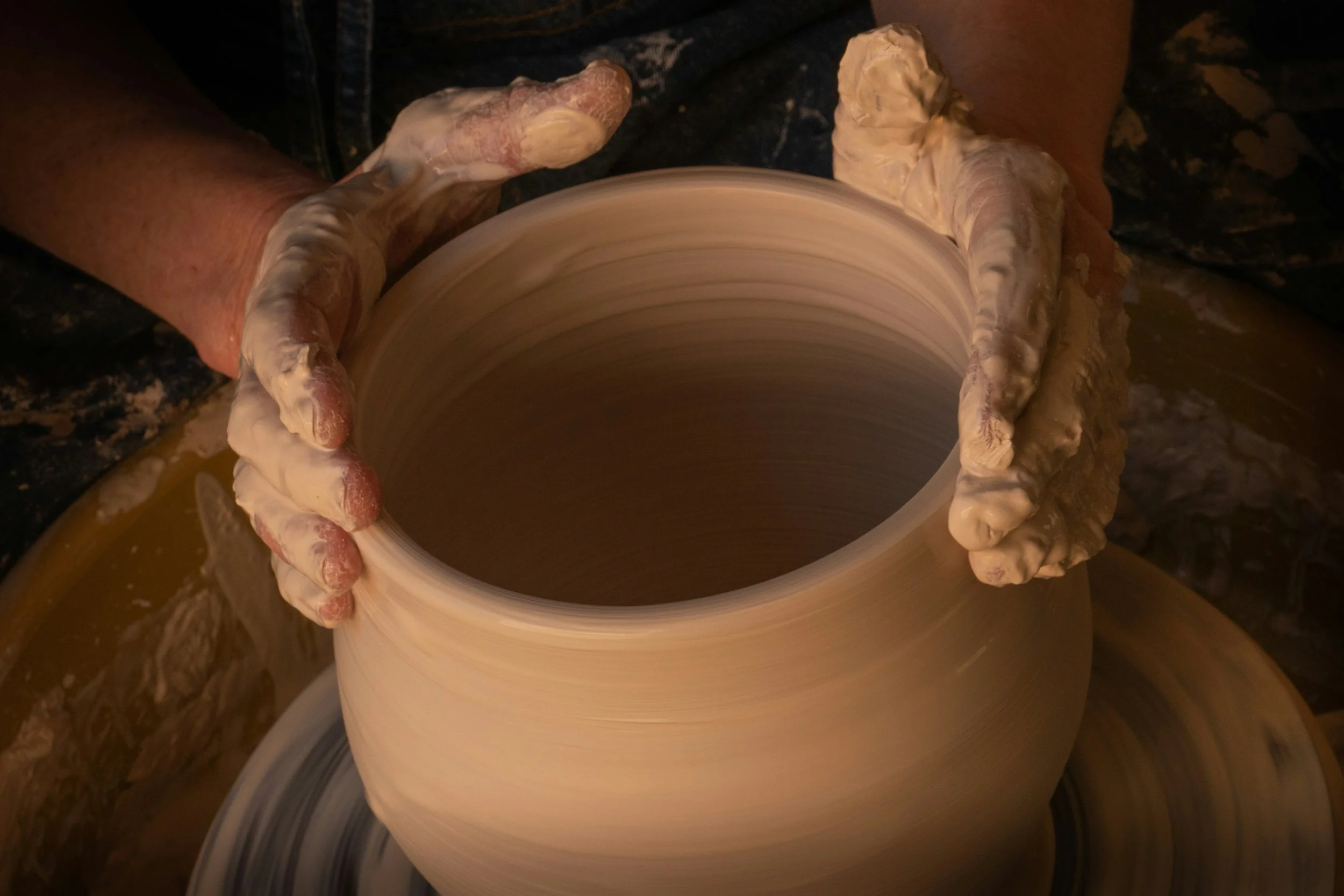
The potter is an intentional, skilled artist, fully in control of his craft. The wheel is always turning as he works. And then there is the clay.
On its own, clay is virtually worthless. But in the hands of the potter, it becomes useful—purposeful. Scripture returns to this image again and again to describe us.
The Potter is our Creator God. We are His creation, shaped with intention. As Ephesians 2:10 says, “we are His workmanship, created in Christ Jesus to do good works, which God prepared in advance for us to do.” Even when we don’t see it or understand what is happening in our lives, He is in control of the wheel.
As it spins, the clay goes round and round—much like life itself. How often do we ask, Where am I going? When will things change?
All the while, the Potter’s hands are never absent. He knows exactly where to press, how much pressure to apply, and when to reshape what isn’t forming correctly.
Sometimes, pieces of clay are removed—set aside in what was known as the potter’s field, a place for discarded fragments. In our own lives, there are moments when we feel like those pieces: broken, overlooked, cast aside.
But that is not the end of our story.
Because the field still belongs to the Potter.
Nothing is outside His reach—not the wheel, not the clay, not even the broken pieces. In the hands of the Master Potter, what seems ruined is never wasted. He gathers what is broken and reshapes it according to His purpose.
Even the greatest act of brokenness—the betrayal of Jesus for blood money—was woven into a sovereign plan that brought redemption and life.
And that is the good news:
The Potter still restores.
He still reshapes.
He still makes something beautiful out of what feels beyond repair.